Kouskousi: The Ancient Mediterranean Gem That's Conquering Modern Kitchens
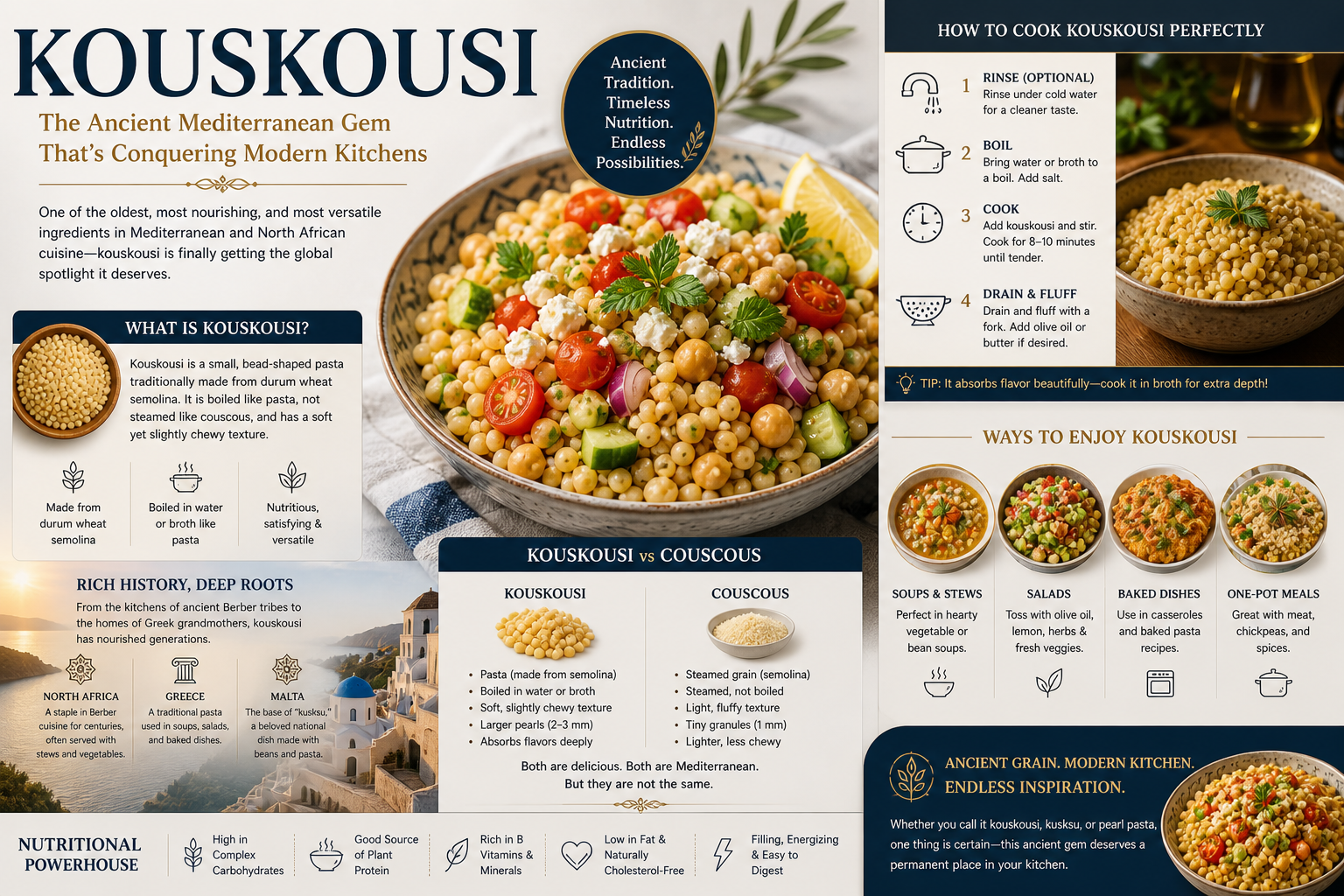
Meta Description: Discover what kouskousi is, where it comes from, how to cook it, and why this tiny Mediterranean pasta is taking global kitchens by storm. Your complete 2026 guide.
Kouskousi: The Ancient Mediterranean Gem That's Conquering Modern Kitchens
If you've stumbled across the word kouskousi while browsing a recipe blog, scrolling through food content on Instagram, or exploring a Mediterranean menu, you're not alone. Searches for this intriguing ingredient have surged in recent years, and for very good reason. Despite its unfamiliar name to many Western cooks, kouskousi is one of the oldest, most nourishing, and most versatile ingredients in Mediterranean and North African cuisine — and it's finally getting the global spotlight it deserves.
In this complete guide, you'll learn exactly what kouskousi is, where it comes from, how it differs from couscous, how to cook it perfectly, and why food lovers worldwide are adding it to their weekly meal rotation.
What Is Kouskousi? A Clear Definition
At its most fundamental level, kouskousi is a small, bead-shaped pasta traditionally made from durum wheat semolina. Measuring roughly 2–3 mm in diameter, it looks like tiny golden pearls and has a soft yet slightly chewy texture when cooked. It is sometimes described as a cross between couscous and orzo — sharing the small scale of the former and the true pasta nature of the latter.
The term itself has multiple roots. In Greek cuisine, κουσκούσι (kouskousi) refers specifically to this tiny pearl pasta, deeply embedded in the culinary traditions of northern Greece. In Maltese culture, the word kusksu describes both a traditional bean-and-pasta soup and the tiny pasta pearls used to make it. Across North Africa — particularly in Morocco, Algeria, and Tunisia — variations of the word refer to couscous-style dishes passed down through Berber culinary traditions for centuries.
This overlap in naming is the source of much confusion. But the core truth is simple: kouskousi is real pasta, made by shaping semolina dough into tiny pearls, then drying them — not a steamed grain like couscous. It is boiled in water or broth, just as you would cook any other pasta.
The Origins of Kouskousi: A History Steeped in Tradition
To understand kouskousi, you have to appreciate the rich, layered food culture from which it emerged. The concept traces back to North African Berber communities, where semolina-based dishes have been staples for over a thousand years. Trade routes running through the Mediterranean basin — connecting North Africa, Malta, Sicily, and Greece — allowed this humble ingredient to evolve and adapt across different cultures.
In Malta, kouskousi developed a distinctly local identity. Influenced by the island's position between Italy and North Africa, Maltese cooks transformed the couscous concept into a boiled pasta product rather than a steamed grain dish. The iconic Kusksu soup — a hearty broth of broad beans, tomatoes, and kouskousi pasta — remains a beloved national dish to this day.
In Greece, particularly in the northern regions, kouskousi became part of the local wheat-farming tradition. Families shaped semolina dough by hand into tiny granules and incorporated them into broths and stews, creating warming, nourishing meals that sustained farming communities through harsh winters.
In North Africa, the preparation technique diverged slightly: semolina granules are rolled by hand with water, then steamed rather than boiled, producing the fluffier texture associated with traditional couscous. While this is technically a different process, the cultural and linguistic roots are shared — explaining why "kouskousi" functions as a umbrella term across regions.
Kouskousi vs. Couscous: What's the Difference?
This is the question most first-time explorers ask, and it's a fair one. The two words look and sound nearly identical, yet they describe meaningfully different foods.
| Feature | Kouskousi | Couscous |
|---|---|---|
| Base ingredient | Durum wheat semolina dough | Crushed/rolled durum wheat semolina |
| Cooking method | Boiled like pasta | Steamed or hydrated with boiling water |
| Texture | Firm, slightly chewy | Light, fluffy, delicate |
| Culinary origin | Greece, Malta, Mediterranean | North Africa (Morocco, Algeria, Tunisia) |
| Classification | True pasta | Pasta-like grain product |
The key takeaway: couscous is steamed; kouskousi is boiled. Couscous has a lighter, more delicate texture, while kouskousi has a firmer bite. Both are wonderfully versatile — but they are not interchangeable in recipes that depend on a specific texture.
The Nutritional Profile of Kouskousi
One of the reasons kouskousi is earning attention from health-conscious cooks is its solid nutritional foundation. As a durum wheat product, it offers:
- Complex carbohydrates for sustained energy — ideal for active lifestyles
- Plant-based protein to support muscle repair and satiety
- Dietary fibre to aid digestion and maintain gut health
- B vitamins including niacin and folate, essential for energy metabolism
- Iron and selenium, important minerals for immunity and cardiovascular health
Per 100g of dry kouskousi pasta, you can expect approximately 350–360 calories, 12–14g of protein, and 3–4g of fibre. When paired with vegetables, legumes like chickpeas or lentils, and lean proteins such as grilled chicken or fish, kouskousi becomes the cornerstone of a genuinely balanced Mediterranean-style meal.
It is worth noting that, because it is wheat-based, kouskousi is not suitable for those with gluten intolerance or coeliac disease. For gluten-free alternatives, quinoa or millet can mimic a similar texture in certain recipes.
How to Cook Kouskousi Perfectly Every Time
Cooking kouskousi is refreshingly straightforward, even for kitchen beginners. Here is the method that works consistently well:
The Basic Boiling Method
- Bring water or broth to a rolling boil. Use stock — chicken, vegetable, or fish — for extra depth of flavour. Add a generous pinch of salt.
- Add the kouskousi. A standard portion is around 60–80g per person.
- Cook for 8–12 minutes, stirring occasionally, until the pearls are tender but still hold a slight bite (al dente).
- Drain and toss immediately with a knob of butter or a drizzle of good olive oil to prevent sticking.
- Season with salt, black pepper, fresh herbs — or whatever your recipe calls for.
The Toasted Method (For Extra Flavour)
For a nuttier, more complex result, toast the dry kouskousi in a dry pan over medium heat for 2–3 minutes before boiling. The granules will turn light golden and develop a warm, roasted aroma. This technique is particularly popular in North African-inspired recipes and takes the dish from simple to spectacular.
Tips for Perfect Results
- Don't overcook. Kouskousi turns mushy quickly, so taste it from the 8-minute mark.
- Cook in broth, not just water. This single upgrade transforms flavour dramatically.
- Add aromatics. A bay leaf, a crushed garlic clove, or a sprig of thyme in the cooking water makes a noticeable difference.
- Rest and fluff. If using the absorption method, cover the pot for 5 minutes off the heat and fluff with a fork before serving.
Popular Dishes and Recipes Using Kouskousi
The beauty of kouskousi is its extraordinary versatility. It functions equally well as a base, a filler, or a star ingredient. Here are some beloved preparations from across the Mediterranean world:
Maltese Kusksu Soup
The most traditional use of kouskousi in Maltese cooking. A hearty, warming soup made with fresh broad beans (ful), tomatoes, onions, and kouskousi pearls simmered in a rich broth. Often finished with ġbejniet (Maltese sheep's cheese) crumbled on top. This dish is a national comfort food — simple, nourishing, and deeply satisfying.
Greek Kouskousi with Seafood
In northern Greece, kouskousi is frequently paired with prawns, mussels, or white fish in a tomato-based sauce spiked with white wine and fresh herbs. The pearls absorb the briny, aromatic sauce beautifully, creating a dish that feels both rustic and elegant.
North African Kouskousi with Lamb and Vegetables
In the Moroccan and Algerian tradition, kouskousi (or couscous-style preparations) are served beneath slow-cooked stews of lamb, root vegetables, chickpeas, and warming spices — cumin, coriander, turmeric, and ras el hanout. This communal dish, served on a large central platter, embodies the spirit of hospitality at the heart of North African food culture.
Modern Mediterranean Bowl
For a contemporary, weekday-friendly take: cook kouskousi in vegetable broth, then top with roasted aubergine, cherry tomatoes, cucumber, a drizzle of tahini or lemon-herb dressing, and a scattering of pomegranate seeds. Ready in under 20 minutes. Nutritious, beautiful, and endlessly adaptable.
Kouskousi Salad
Cooked and cooled kouskousi makes an excellent base for grain-style salads. Toss with chopped parsley, mint, red onion, cucumber, olive oil, and lemon juice for a Mediterranean-inspired side dish that travels well and improves as it sits.
Why Kouskousi Is Trending in Global Kitchens
Several converging trends explain why kouskousi has moved from a regional staple to a globally recognised ingredient:
The Mediterranean diet boom. Consistently ranked among the world's healthiest eating patterns, the Mediterranean diet has driven enormous interest in its core ingredients — olive oil, legumes, whole grains, and small pasta varieties like kouskousi.
Speed and convenience. In a world of time-pressed home cooks, an ingredient that goes from dry packet to finished dish in under 15 minutes holds tremendous appeal. Kouskousi fits perfectly into the demand for quick, nutritious weeknight meals.
Social media and food content creators. Kouskousi is, frankly, photogenic. Its pearlescent texture, warm golden colour, and ability to cradle vibrant sauces and colourful toppings makes it ideal content for Instagram and TikTok. Every beautiful bowl posted online introduces the ingredient to thousands of new cooks.
Culinary curiosity. Post-pandemic, there has been a measurable surge in interest in international cuisines. Home cooks are actively seeking ingredients that connect them to different food cultures and traditions — and kouskousi delivers on that with centuries of authentic history behind it.
Where to Buy Kouskousi
Kouskousi is becoming increasingly accessible:
- Specialty Mediterranean or Middle Eastern grocery shops — your most reliable source for authentic product
- Online retailers — widely available on Amazon, Ocado, and various specialty food platforms
- Larger supermarkets — look in the world foods aisle or alongside pasta and grains
- Health food stores — often stock whole wheat varieties
Look for brands that use 100% durum wheat semolina and contain no artificial additives. Dried kouskousi has a long shelf life — typically 12–24 months — making it a practical pantry staple.
Frequently Asked Questions About Kouskousi
Q1: Is kouskousi the same as couscous? No. While the names sound similar and both originate from durum wheat semolina, they are distinct products. Kouskousi is a true pasta boiled in water or broth, while couscous is a steamed or hydrated grain product. Their textures and cooking methods differ meaningfully.
Q2: How long does kouskousi take to cook? Typically 8–12 minutes when boiled, depending on size and brand. Always check the packet instructions and taste-test from the 8-minute mark to avoid overcooking.
Q3: Is kouskousi healthy? Yes — it is a good source of complex carbohydrates, plant-based protein, fibre, B vitamins, and minerals. When paired with vegetables and lean proteins as part of a balanced meal, it aligns well with Mediterranean dietary principles.
Q4: Can kouskousi be served cold? Absolutely. Cooked and cooled kouskousi works beautifully in salads, grain bowls, and cold side dishes. It holds its texture well and absorbs dressings effectively.
Q5: Where does kouskousi come from? Its origins span several Mediterranean cultures — notably Malta, Greece, and North Africa. Each region has its own variation of the ingredient and dishes built around it, connected by shared Berber and Mediterranean culinary heritage.
Conclusion: Time to Cook with Kouskousi
Kouskousi is more than a food trend. It is an ancient ingredient with deep cultural roots, a remarkable nutritional profile, and the kind of everyday versatility that earns a permanent place in your kitchen. Whether you are drawn to the soul-warming simplicity of Maltese kusksu soup, the fragrant complexity of a North African lamb stew, or the ease of a 15-minute Mediterranean grain bowl, kouskousi delivers every time.
The best part? You don't need to be an expert cook to use it well. Its forgiving nature, quick cooking time, and ability to absorb any flavour you pair it with make it one of the most accessible ingredients a curious home cook can discover.
Ready to try kouskousi for the first time? Start simple: cook it in good-quality chicken broth, toss with olive oil and fresh parsley, and serve alongside roasted vegetables or grilled fish. Once you taste it, you'll understand why generations of Mediterranean cooks have kept it at the heart of their kitchens.
📌 Internal linking suggestions: Link to your posts on "Mediterranean diet meal plan," "easy pasta recipes," "durum wheat pasta guide," and "North African cuisine basics."
📌 External authority references: UNESCO's Intangible Cultural Heritage listing for couscous; Mediterranean Diet Foundation (Mediterranean-diet.com); Maltese food heritage resources.