Tsunaihaiya: The Art of Cultural Fusion in Japanese Artisan Jewelry
Meta Description: Discover Tsunaihaiya — the Japanese artisan jewelry brand fusing Apache heritage with Japanese craftsmanship. Explore its symbolism, techniques, and iconic pieces.
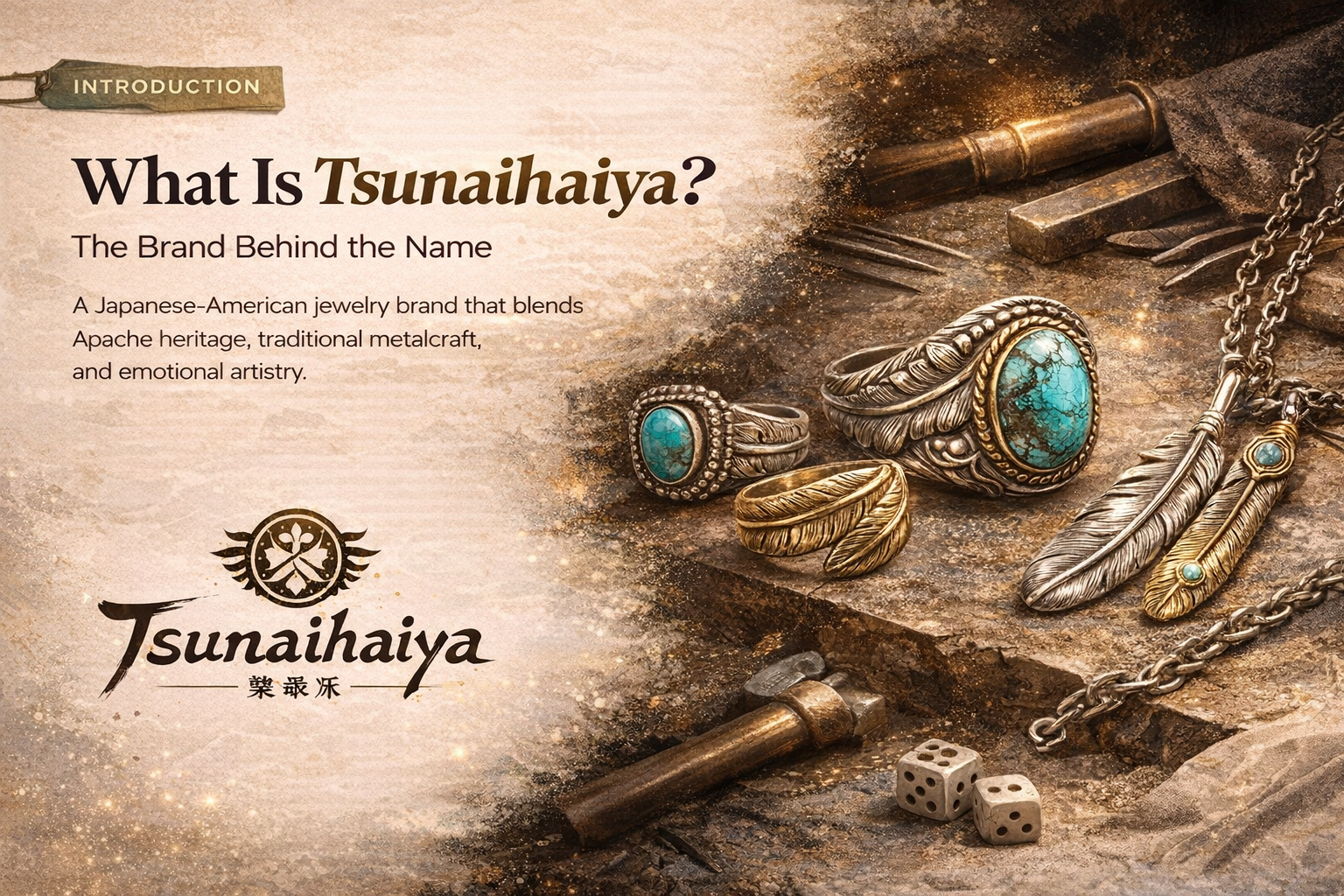
There are jewelry brands, and then there are living philosophies forged in silver. Tsunaihaiya (ツナイハイヤ) falls firmly in the second category. If you've recently come across this name while exploring Japanese independent fashion, artisan accessories, or the world of slow-fashion jewelry, you're looking at something genuinely rare. Tsunaihaiya is a Japanese independent jewelry label that bridges two distinct but deeply resonant traditions — Native American silversmithing and Japanese precision craftsmanship — into wearable pieces that carry real cultural weight.
The name itself tells you everything. Derived from the Apache language, "Tsunaihaiya" means "Blue Bird" — a choice that reflects the brand's deep respect for and connection with Native American heritage. This isn't trend-chasing. It's a considered, decades-long commitment to making objects that mean something.
What Is Tsunaihaiya? The Brand Behind the Name
Tsunaihaiya represents a unique blend of culture, art, and modern creative expression. It is both a jewelry brand and a broader concept connecting heritage, identity, and emotional storytelling. Inspired by Apache heritage, Japanese craftsmanship, and traditional metalworking techniques, Tsunaihaiya produces pieces that are visually striking while deeply meaningful.
The brand was created by designer Yusuke Kuwano, whose work is defined by one governing principle: that texture is the ultimate expression of beauty. In his own words, even finishing a surface to a mirror polish is a form of texture — the question is simply whether you can find beauty in it. This philosophy drives every piece that leaves his workshop.
The brand's sun motif — stamped on charms, clasps, and hallmarks across the collection — represents 日出ずる (hi-izuru), meaning "the rising sun." It's a symbol of renewal, optimism, and the beginning of something new. Once you know that, you see the entire collection differently.
The Craft Philosophy: Monozukuri Meets Native American Tradition
To understand what makes Tsunaihaiya extraordinary, you need to understand two traditions that, on the surface, seem worlds apart.
Monozukuri (物作り) is a Japanese concept that translates loosely as "the art of making things with a soul." It describes craftsmanship not as a skill but as a devotion — an insistence on doing things slowly, correctly, and with full presence. It's the philosophy behind the finest Japanese knives, ceramics, and lacquerware.
Tsunaihaiya's philosophy is rooted in this concept of monozukuri. While the techniques are drawn from Navajo and Zuni traditions, the execution carries a Japanese dedication to perfection. This results in jewelry that feels rugged and organic, yet polished and sophisticated.
The Native American silversmithing traditions that underpin the work — particularly stamp work, turquoise setting, and heavy-gauge silver construction — come from centuries of Indigenous artistry. These are not aesthetics borrowed casually; they are techniques studied seriously.
The fusion found in Tsunaihaiya works because it doesn't attempt to "copy" Indigenous art for the sake of trend. The approach is one of deep respect, careful learning, and genuine creative dialogue between two cultures that both prize craftsmanship above convenience.
Tsunaihaiya's Signature Techniques: How Each Piece Is Made
Hand Reticulation: Silver That Tells Its Own Story
One of the most distinctive processes in the Tsunaihaiya collection is reticulation — a silversmithing technique that produces uniquely textured surfaces impossible to replicate by machine.
A thin silver sheet is heated repeatedly with a torch to build up a layer of silver oxide on the surface. Further heating then causes the surface to form a mesh-like or wave-patterned texture — every single piece emerging as a unique, one-of-a-kind object.
The result is what Tsunaihaiya calls the Texturerized Ring (Reticulation) — a wide-band silver ring whose surface looks simultaneously volcanic and organic, like a landscape seen from above. Because it's entirely handmade and technique-dependent, no two rings are ever identical. You're not just buying a piece of jewelry. You're buying a single moment in a craftsman's practice.
Stamp Work and Hand-Forging
Stamp work is the backbone of the brand's aesthetic. Using hardened steel stamps, the artist hammers intricate patterns into silver. Each strike must be precise — too hard and the silver may crack; too light and the pattern loses its depth. The patterns often tell a story of the natural world, representing lightning, rain, or mountains.
Many pieces use a coin-silver style alloy, which provides a unique patina over time. The silver is often forged — heated and hammered into shape — rather than cast in a mold. This gives Tsunaihaiya jewelry a density and hand-feel that feels substantially more present than standard commercial jewelry.
The Symbolism Woven into Every Piece
Tsunaihaiya jewelry is not decorative in the shallow sense. Every material choice and motif carries meaning.
Turquoise symbolizes protection and balance, while silver conveys clarity and resilience. Feathers and arrows represent freedom, guidance, and spiritual alignment. The design philosophy is minimalist yet deeply expressive, allowing wearers to connect with heritage, identity, and personal narratives.
The three most recurring symbolic elements across the collection are:
- Turquoise — used in high-grade cabochon settings, this stone is central to both Southwestern Native American jewelry traditions and the brand's visual identity. Its cool blue-green tones offset the warm patina of aged silver beautifully.
- Feathers — a classic motif in Southwestern jewelry, representing freedom and connection to the divine. In the Tsunaihaiya interpretation, the feathers are incredibly detailed, with each barb individually carved or stamped.
- The Rising Sun mark — the brand's hallmark, stamped on every authentic piece, signals both the maker's identity and the broader philosophy of renewal.
Iconic Pieces in the Tsunaihaiya Collection
The Texturerized Ring (Reticulation)
The flagship piece. A wide-band sterling silver ring whose surface is shaped by heat and chemical reaction rather than a tool. The ring's inner band is V-shaped for comfortable wear — a detail that shows the same precision applied to ergonomics as to aesthetics. Available in limited quantities, with each piece hallmarked by the artist.
The Feather Necklace on Leather Cord
One of the brand's most recognizable pieces. A hand-carved silver feather pendant suspended on a brown leather cord — rugged, wearable, and quietly beautiful. The feather detail is achieved through stamp work, with each barb defined by individual tool strikes.
The Colorfield Beads Anklet
A double-strand anklet featuring matte white magnesite beads and accents of turquoise green, assembled with crushed stone interwoven throughout. The centerpiece is a silver charm stamped with the brand's rising sun motif. Adjustable in three sizes and designed to be unisex — a piece that works across seasons and styles.
The Texturerized Bangle (Reticulation)
The wide-cuff companion to the reticulation ring. A heavy silver bracelet featuring a central burst of lines radiating from a focal point, often centered on a high-grade turquoise cabochon. These cuffs are a favorite among collectors who appreciate the weight of traditional jewelry combined with the clean lines of modern design.
Why Tsunaihaiya Resonates: Slow Fashion in a Fast World
There's a reason collectors seek out Tsunaihaiya pieces even as the brand has wound down formal production. In a market flooded with algorithmically designed, factory-produced accessories, Tsunaihaiya represents the opposite of disposability.
Each piece takes significant time to produce. The reticulation process alone requires repeated heating cycles, careful timing, and an experienced eye to read the silver's behavior under flame. There's no shortcut, and that's entirely the point.
The slow fashion movement — which prioritizes quality, craft, and longevity over trend cycles — has found a genuine poster child in this brand. Buyers don't just wear Tsunaihaiya; they collect it, preserve it, and pass it on. The patina that develops on forged silver over years of wear is not a defect — it's the piece becoming more itself.
How to Identify Authentic Tsunaihaiya Pieces
As the brand grows in secondary market visibility, the ability to distinguish genuine pieces becomes important. Here's what to look for:
- Artist's hallmark — every authentic piece carries the artist's stamp, typically on the inner band of rings or the back of pendants.
- Weight and density — forged and hand-stamped silver has a distinctive heft that cast pieces lack.
- Unique surface texture — no two reticulated pieces are identical. If a "reticulation" piece looks too uniform, it wasn't made by hand.
- Rising sun motif — the brand's signature sun mark appears on clasps, charms, and tags across the collection.
- Provenance — authentic pieces are typically sourced from Japanese boutiques like It's 12 Midnight or verified secondary market sellers.
Where to Find Tsunaihaiya Today
The brand has concluded formal production, meaning remaining inventory is limited and sold on a first-come, first-served basis. Current channels include:
- It's 12 Midnight (its12midnight.com) — the primary Japanese e-commerce retailer that stocked the brand
- Japanese vintage and select-shop platforms — sites like Mercari Japan and Rakuten occasionally list pre-owned pieces
- High-end boutiques in Tokyo — several items have become staples for collectors and are increasingly sought after in European and American markets
If you're outside Japan, working with a proxy buying service or a Japan-based personal shopper is often the most reliable way to access authentic pieces.
FAQ: Everything You Need to Know About Tsunaihaiya
Q1: What does "Tsunaihaiya" mean?
The name is derived from the Apache language and means "Blue Bird." The brand's designer chose it to honor the Native American heritage that forms one of the two pillars of the brand's craft philosophy.
Q2: Is Tsunaihaiya still producing new pieces?
The brand has officially concluded new production. Remaining pieces are available through authorized retailers while stocks last. This makes existing inventory particularly valuable for collectors.
Q3: What materials does Tsunaihaiya use?
The brand primarily works in sterling silver and coin-silver alloys, with high-grade turquoise cabochons, natural stone beads (including magnesite), and leather cording. All metalwork is hand-forged or hand-stamped, never cast from molds.
Q4: Who is the designer behind Tsunaihaiya?
The brand was created by Yusuke Kuwano, a Japanese jewelry designer whose work fuses Native American silversmithing techniques (particularly from Navajo and Zuni traditions) with Japanese monozukuri — the philosophy of making objects with soul and precision.
Q5: Why are Tsunaihaiya pieces considered unique?
Because they're genuinely one-of-a-kind. Processes like reticulation — where surface texture is created through repeated torch-heating — produce results that vary with each firing. No two reticulated pieces ever look exactly alike, making every item a distinct, unrepeatable object.
Conclusion: The Lasting Value of Something Made With Intention
Tsunaihaiya occupies a rare position in the world of contemporary jewelry. It is neither purely Japanese nor purely American; it belongs to both traditions and does justice to each. In a world where most accessories are designed in minutes and manufactured by the thousands, Tsunaihaiya pieces are the product of deep study, patient hands, and a commitment to making things that outlast trends.
If you're building a collection of meaningful, culturally grounded pieces — or simply want jewelry that carries a story rather than just a logo — Tsunaihaiya deserves your attention. Given that production has ended, the window to acquire genuine pieces is narrowing.
Start your search now. Look for the rising sun hallmark. Feel the weight of the silver. Understand what you're holding.
📌 On-Page SEO Notes (For Editors)
Internal Linking Suggestions:
- Link to articles on Japanese artisan jewelry brands
- Link to a guide on Native American silversmithing traditions
- Link to a slow fashion / conscious buying roundup
- Link to a turquoise gemstone buying guide
External Authority References:
- Smithsonian National Museum of the American Indian — Apache cultural context
- GIA (Gemological Institute of America) — turquoise grading and quality standards
- The Crafts Council — monozukuri and artisan craft discourse
LSI / Related Keywords Used:
Japanese artisan jewelry, Yusuke Kuwano, reticulation silversmithing, Native American silver jewelry, monozukuri, Apache heritage jewelry, turquoise cabochon, stamp work silver, slow fashion jewelry, handmade silver rings Japan, Tsunai Haiya brand, ツナイハイヤ